Fungal Acne vs Regular Acne: How to Tell Apart
You follow a solid skincare routine, use the right cleanser, and still wake up with clusters of tiny bumps that refuse to go away. Sound familiar? There is a good chance you are dealing with fungal acne, not the regular kind. And the treatment for each one is completely different.
Understanding the difference between fungal acne and regular acne is the first step toward clearing your skin for good. Misdiagnosing your breakouts can lead to months of frustration, wasted products, and worsening symptoms. This is especially true during the monsoon season, when humidity and sweat create the perfect environment for fungal breakouts on your face and body.
Whether your bumps are caused by bacteria or yeast, your skin deserves the right approach. Let’s break down exactly how to tell if your acne is fungal, what triggers each type, and how Bhumi Blend’s organic skincare products can support healthier, clearer skin through every season.
What Is Fungal Acne and How Is It Different from Regular Acne?
Regular acne, also known as acne vulgaris, is caused by bacteria (usually Cutibacterium acnes) clogging your pores along with excess oil and dead skin cells. It shows up as a mix of blackheads, whiteheads, cysts, and pimples of varying sizes.
Fungal acne, on the other hand, is technically called pityrosporum folliculitis or malassezia folliculitis. It is not caused by bacteria at all. Instead, it is triggered by an overgrowth of Malassezia yeast, which naturally lives on your skin. When conditions become warm and moist, this yeast multiplies inside the hair follicles, causing inflammation and breakouts.
The key distinction? Regular acne responds to antibiotics and traditional acne treatments. Fungal acne is antibiotic resistant and actually gets worse with standard acne medications because those treatments can disrupt the skin’s bacterial balance, giving yeast even more room to grow.
How to Tell If Your Acne Is Fungal: Key Symptoms
Fungal acne symptoms are quite specific once you know what to look for. Here are the major differences that help you identify which type of breakout you are dealing with.
Appearance and Pattern
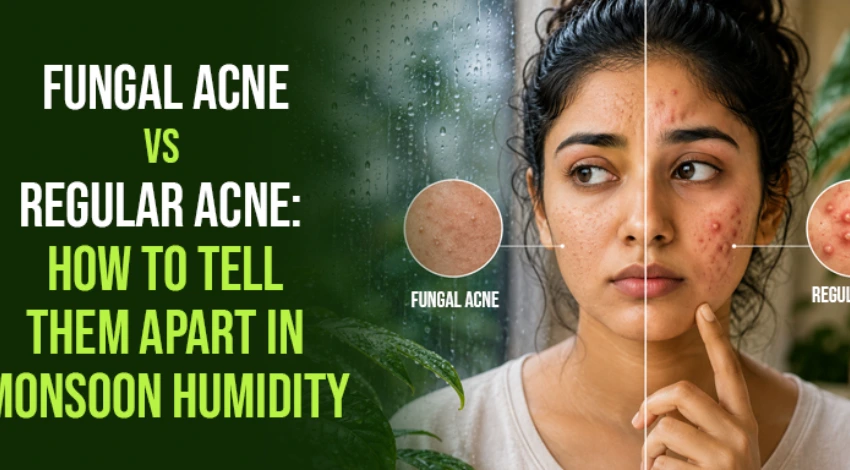
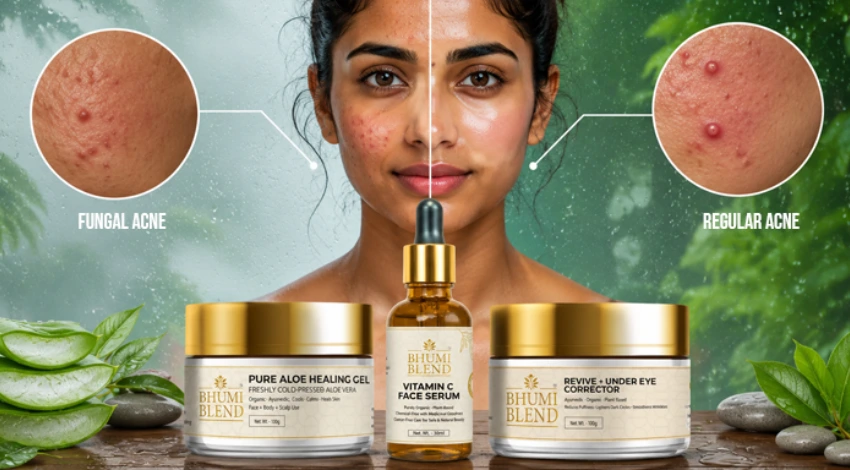
Fungal acne appears as uniform, small bumps that are roughly the same size. They often cluster together on the forehead, chest, upper back, and along the jawline. Regular acne, by contrast, includes a variety of lesion types like deep cysts, blackheads, whiteheads, and pustules in different sizes scattered across the face.
Itching
One of the most reliable indicators is itching. Fungal acne itching is persistent and sometimes intense. Regular acne might feel sore or tender, but it rarely itches. If your breakouts make you want to scratch your skin, yeast is likely the culprit.
Response to Acne Products
If you have been using standard acne treatments like benzoyl peroxide or topical antibiotics for weeks with zero improvement, or if your skin is actually getting worse, that is a strong sign of fungal breakouts. Pityrosporum folliculitis does not respond to treatments designed for bacterial acne.
Timing and Triggers
Fungal acne often flares up in hot, humid weather, after sweating, or during the monsoon season. It can also appear after a course of antibiotics that disrupts your skin’s natural microbiome. Regular acne tends to be more connected to hormonal changes, stress, and diet.
Why Fungal Acne Gets Worse During Monsoon Season
Monsoon acne is a real phenomenon, and fungal acne in monsoon weather is especially common across India. The combination of high humidity, trapped sweat, and occlusive clothing creates an environment where Malassezia yeast thrives.
During the rainy season, your skin produces more sebum. Moisture stays trapped against the skin for longer periods. Tight, damp clothing adds friction and warmth. All of these factors fuel the overgrowth of yeast in hair follicles, leading to those frustrating clusters of bumps.
This is also why monsoon acne treatment needs a different strategy than your typical summer or winter skincare approach. Lightweight, non-comedogenic, and antifungal-friendly products become essential.
How to Diagnose Fungal Acne at Home
While a dermatologist can confirm malassezia acne identification through a skin scraping or Wood’s lamp test, you can do a reasonable self-assessment at home.
Ask yourself these questions:
- Are the bumps uniform in size and clustered together?
- Do they itch more than they hurt?
- Have they appeared on your forehead, chest, or back rather than just the chin and cheeks?
- Did they start or worsen during humid weather or after taking antibiotics?
- Have standard acne products failed to help or made things worse?
If you answered yes to three or more of these, there is a strong likelihood your breakouts are fungal rather than bacterial. Either way, switching to gentle, organic skincare is a smart move while you figure out the right treatment plan.
Treating Fungal Acne vs Regular Acne: What Actually Works
Treating fungal acne requires a fundamentally different approach than treating regular acne. Standard acne-fighting ingredients like salicylic acid and benzoyl peroxide may help with bacterial breakouts but do little for yeast-driven issues.
For malassezia folliculitis treatment, dermatologists often recommend antifungal agents like ketoconazole, zinc pyrithione, or selenium sulfide. Equally important is switching to skincare products that do not feed the yeast. Malassezia thrives on certain fatty acids and esters commonly found in conventional moisturizers and serums.
This is where choosing the right skincare products makes a real difference.
How Bhumi Blend Products Support Fungal Acne Prone Skin
Bhumi Blend Organic Vitamin C Serum helps brighten post-acne marks and supports the skin’s natural healing process. Vitamin C is a potent antioxidant that fights free radical damage caused by inflammation, whether your breakouts are fungal or bacterial. Its lightweight formulation means it does not clog pores or create the heavy, occlusive layer that feeds yeast.
Bhumi Blend Organic Aloe Vera Gel is a powerhouse for calming irritated, itchy skin. Aloe vera has natural antifungal and antibacterial properties, making it an excellent choice for soothing fungal acne symptoms without aggravating the condition. It hydrates without adding oil, which is exactly what fungal acne prone skin needs, especially during monsoon.
Bhumi Blend Organic Under Eye Cream addresses the collateral damage that chronic skin issues cause. Breakouts, poor sleep from itchy skin, and the stress of dealing with persistent acne all take a toll on the delicate under-eye area. This cream nourishes and repairs that skin gently, using organic ingredients that are safe for sensitive and acne-prone skin types.
Daily Skincare Tips to Prevent Fungal and Regular Breakouts
Prevention is always easier than treatment. Here are practical steps to keep both fungal and regular acne under control:
- Shower and change clothes immediately after sweating, especially during monsoon
- Use lightweight, non-comedogenic skincare products like Bhumi Blend’s organic range
- Avoid heavy creams, oils with long-chain fatty acids, and thick foundations during humid months
- Wash pillowcases and towels frequently to prevent yeast and bacteria buildup
- Keep your skin dry and clean without over-stripping it of natural moisture
- Incorporate antioxidant-rich products like Bhumi Blend Organic Vitamin C Serum to strengthen your skin barrier
- Use Bhumi Blend Organic Aloe Vera Gel as a soothing, hydrating step that does not trigger fungal breakouts
Consistency matters more than complexity. A simple, clean routine with the right products does far more than a 10-step routine filled with ingredients that aggravate your skin.
Knowing the difference between fungal acne and regular acne can save you months of frustration and prevent you from using products that make things worse. Fungal acne is driven by yeast, shows up as uniform itchy bumps, and thrives in humid monsoon conditions. Regular acne is bacterial, varies in size and type, and responds to traditional acne treatments.
Regardless of which type you are dealing with, your skin benefits from clean, organic, and lightweight products that do not clog pores or feed yeast overgrowth. Bhumi Blend’s Organic Vitamin C Serum, Organic Aloe Vera Gel, and Organic Under Eye Cream are formulated to support acne-prone skin naturally, without harsh chemicals or pore-clogging ingredients.
If your breakouts have been stubborn, consider whether you have been treating the wrong kind of acne. Switch to a gentle, organic routine with Bhumi Blend and give your skin the care it actually needs. For persistent or severe cases, always consult a dermatologist to confirm whether your breakouts are fungal or bacterial before starting targeted treatment.
Frequently Asked Questions
How do I know if my acne is fungal or regular?
Fungal acne appears as uniform, itchy, small bumps in clusters, while regular acne varies in size and type and usually feels sore rather than itchy.
Why does fungal acne get worse during monsoon?
High humidity, excess sweat, and trapped moisture during monsoon create ideal conditions for Malassezia yeast to overgrow and cause fungal breakouts.
Can regular acne products treat fungal acne?
No, standard acne products targeting bacteria are ineffective against fungal acne and can actually make it worse by disrupting the skin’s microbial balance.